Festive Herb Roast Turkey
Highlighted under: Summer Recipes
I absolutely love preparing a Festive Herb Roast Turkey for our family gatherings. The aroma fills our home with warmth and a sense of celebration, creating an unforgettable atmosphere. Each year, I experiment with a mix of fresh herbs that elevate the flavor profile beyond the ordinary. The key is to allow the turkey to marinate overnight, allowing the herbs to penetrate deeply. This ensures every bite is bursting with flavor and sure to impress everyone at the table. If you want to create lasting memories with a delicious centerpiece, this turkey is the way to go!
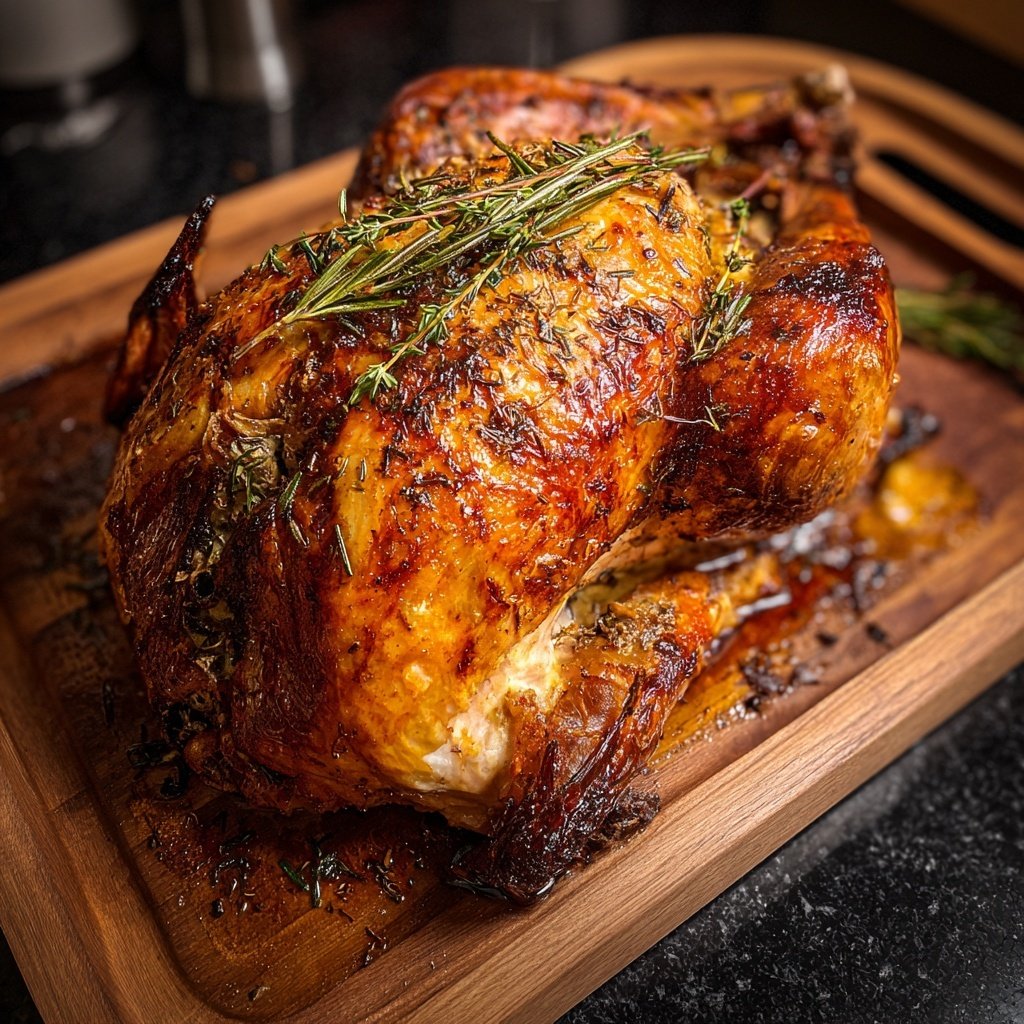
When I first attempted to make a roast turkey, I was intimidated—so many factors to consider! However, my journey led me to learn that choosing the right blend of herbs can completely transform the dish. I often mix sage, rosemary, and thyme for a well-rounded flavor.
One of my fondest memories is when I discovered the importance of resting the turkey after roasting. This crucial step allows the juices to redistribute, ensuring moist and flavorful slices. Trust me, this little trick is game-changing for the perfect turkey!
Why You'll Love This Recipe
- Aromatic blend of fresh herbs encompassing the spirit of the season.
- Perfectly roasted turkey that stays juicy and flavorsome.
- A stunning centerpiece that will wow your guests.
The Importance of Marinating
Marinating the turkey overnight is crucial for achieving a rich depth of flavor. By allowing the turkey to soak in the herb-infused butter, you enable the flavors to penetrate not just the skin but also the meat itself. This process helps break down muscle fibers, ensuring that each slice is tender and succulent. If you're short on time, aim for at least a 4-hour marination, but ideally, overnight is best for maximum flavor impact.
When marinating, be sure to keep the turkey covered in the refrigerator. This prevents any contamination and helps maintain the turkey’s moisture levels. If you have space, consider placing the turkey in a large resealable bag to maximize the surface area of the meat exposed to the marinade. This simple step can significantly elevate the taste.
Basting for Juiciness
Basting the turkey every 30 minutes during roasting is a critical step in ensuring a juicy result. This helps to keep the skin moist and enhances the flavor. Use a baster or a large spoon to pour the pan juices over the turkey, focusing on the breast and the thighs, where meat can easily dry out. If you find that the top of your turkey is browning too quickly, tent it loosely with aluminum foil to protect it while allowing the rest of the meat to cook thoroughly.
The chicken broth added to the roasting pan not only provides moisture but also creates a flavorful steam that enhances the turkey's overall taste. Keep an eye on the broth level; if it evaporates completely, your turkey may end up drying out. Add more broth as needed to keep the moisture levels consistent throughout the cooking process.
Serving and Leftover Ideas
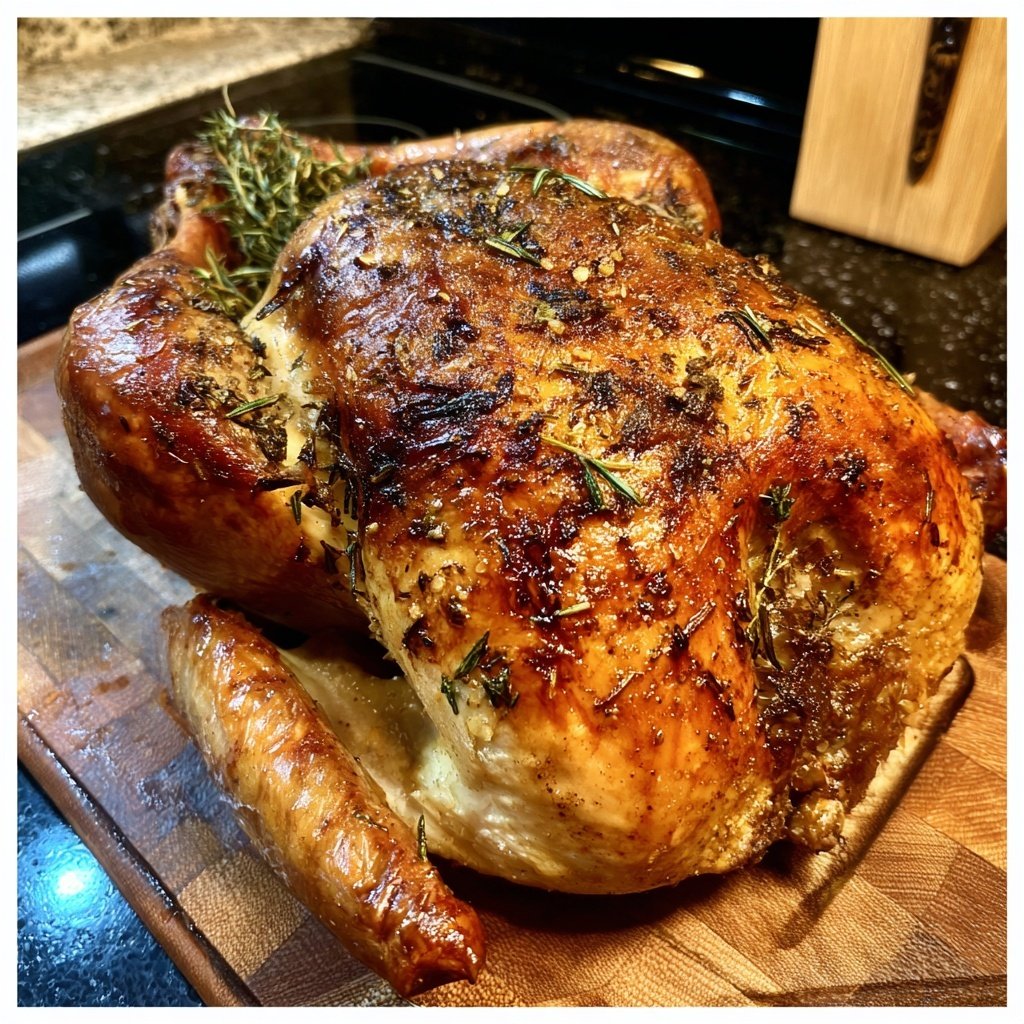
Once your turkey has rested for 30 minutes, carve it carefully to retain as much juice as possible. Use a sharp carving knife for clean cuts, starting with the drumsticks and working your way to the breast. For an elegant presentation, arrange the slices on a serving platter and garnish with additional fresh herbs, which not only looks beautiful but also enhances the aroma.
If you have leftovers, consider making a rich turkey soup by simmering the carcass with vegetables and herbs. Alternatively, shred the turkey for sandwiches or use it in a hearty casserole. Store any leftover turkey in an airtight container in the refrigerator for up to 4 days, or freeze portions for up to 3 months. Just be sure to use proper defrosting methods, like overnight in the refrigerator, to maintain its moisture and flavor.
Ingredients
Gather these fresh and flavorful components:
Turkey and Marinade
- 1 whole turkey (12-14 pounds)
- 1/2 cup unsalted butter, softened
- 2 tablespoons olive oil
- 1 tablespoon salt
- 1 tablespoon black pepper
- 1 tablespoon fresh sage, chopped
- 1 tablespoon fresh rosemary, chopped
- 1 tablespoon fresh thyme, chopped
- 4 cloves garlic, minced
- 2 cups chicken broth
Make sure the turkey is thawed and prepared for seasoning.
Instructions
Follow these steps for a perfect roast:
Prepare the Turkey
Preheat your oven to 325°F (165°C). Remove the giblets and neck from the turkey cavity, then pat the turkey dry with paper towels.
Make the Herb Butter
In a bowl, mix the softened butter, olive oil, salt, pepper, sage, rosemary, thyme, and minced garlic until well combined.
Season the Turkey
Carefully loosen the skin over the turkey breast and rub some of the herb butter mixture directly onto the meat. Rub the remaining mixture all over the surface of the turkey.
Roast the Turkey
Place the turkey in a roasting pan. Pour chicken broth into the bottom of the pan. Roast in the oven for about 3 hours, basting every 30 minutes, until the internal temperature reaches 165°F (75°C).
Rest and Serve
Once cooked, remove the turkey from the oven and let it rest for 30 minutes before carving. This allows the juices to settle, resulting in a tender turkey.
Serve with your favorite sides and enjoy!
Pro Tips
- For even more flavor, consider adding citrus slices and onion inside the cavity before roasting.
Ingredient Substitutions
If you're looking for a butter substitute, ghee or olive oil can work well, especially for those avoiding dairy. While it won't have the same creamy texture, it can still infuse the turkey with flavor. For the herbs, feel free to experiment with any fresh herbs you enjoy. Oregano and parsley would make excellent alternatives to sage or rosemary, providing a different yet delightful flavor profile.
In case you cannot find a whole turkey, consider using turkey breasts or thighs instead, adjusting the cooking time accordingly—generally, turkey breasts take about 20 minutes per pound at the same temperature. Just ensure that the internal temperature still reaches the safe zone of 165°F (75°C) before removing.
Troubleshooting Common Issues
If your turkey skin isn’t browning as desired, you can finish it off under the broiler for the last few minutes—watch it carefully to avoid burning. Alternatively, if the turkey skin is burning before the meat is cooked through, tenting it with aluminum foil can help shield it and continue cooking evenly.
For those worried about dryness, consider covering the turkey with foil for the first half of the cooking time to lock in moisture, removing it towards the end for a golden finish. Also, gauge doneness using an instant-read thermometer in the thickest part of the thigh, avoiding bones for an accurate reading.
Questions About Recipes
→ Can I prepare the turkey a day in advance?
Yes! Seasoning the turkey a day ahead allows the flavors to deepen. Just make sure to keep it refrigerated.
→ What should I do if my turkey is browning too quickly?
If the turkey is browning too fast, tent it with aluminum foil to prevent burning.
→ How can I ensure the turkey stays moist?
Basting the turkey regularly and allowing it to rest after cooking are key to retaining moisture.
→ Is it necessary to use fresh herbs?
While fresh herbs provide the best flavor, dried herbs can be used as a substitute at a reduced quantity.
Festive Herb Roast Turkey
Created by: The Chefmaxskitchen Team
Recipe Type: Summer Recipes
Skill Level: Intermediate
Final Quantity: 8-10 servings
What You'll Need
Turkey and Marinade
- 1 whole turkey (12-14 pounds)
- 1/2 cup unsalted butter, softened
- 2 tablespoons olive oil
- 1 tablespoon salt
- 1 tablespoon black pepper
- 1 tablespoon fresh sage, chopped
- 1 tablespoon fresh rosemary, chopped
- 1 tablespoon fresh thyme, chopped
- 4 cloves garlic, minced
- 2 cups chicken broth
How-To Steps
Preheat your oven to 325°F (165°C). Remove the giblets and neck from the turkey cavity, then pat the turkey dry with paper towels.
In a bowl, mix the softened butter, olive oil, salt, pepper, sage, rosemary, thyme, and minced garlic until well combined.
Carefully loosen the skin over the turkey breast and rub some of the herb butter mixture directly onto the meat. Rub the remaining mixture all over the surface of the turkey.
Place the turkey in a roasting pan. Pour chicken broth into the bottom of the pan. Roast in the oven for about 3 hours, basting every 30 minutes, until the internal temperature reaches 165°F (75°C).
Once cooked, remove the turkey from the oven and let it rest for 30 minutes before carving. This allows the juices to settle, resulting in a tender turkey.
Extra Tips
- For even more flavor, consider adding citrus slices and onion inside the cavity before roasting.
Nutritional Breakdown (Per Serving)
- Calories: 400 kcal
- Total Fat: 24g
- Saturated Fat: 10g
- Cholesterol: 120mg
- Sodium: 200mg
- Total Carbohydrates: 0g
- Dietary Fiber: 0g
- Sugars: 0g
- Protein: 42g